Blog › Quality Series › Chapter 5
◆ Quality Series · Part 5
In short: a walk through the line, from purified water to a coded carton — and the parameters we lock at each step.
The process, step by step
- Purified water is prepared for compounding.
- The povidone-iodine solution is compounded to 4.5–5.5 g/L available iodine, pH 2.0–4.0.
- Sticks and cotton heads are made and pouches are formed from barrier film.
- The cotton head is impregnated with iodine to a fluid content of ≥ 50%.
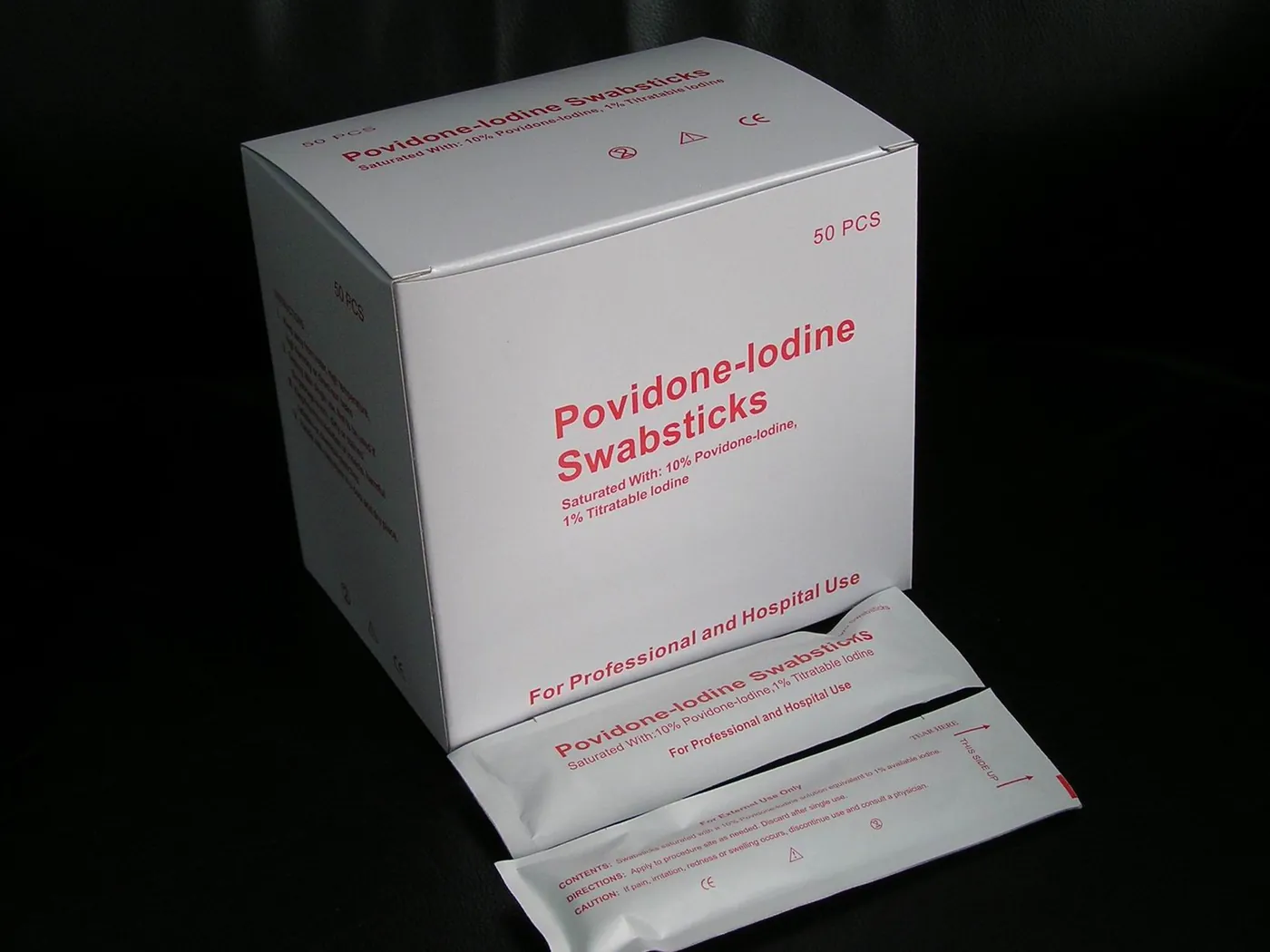
- Swabs are bagged by pack count.
- The pouch is sealed — leak-free and light-protecting.
- Each batch goes through a seal-integrity test.
- Cartoning and batch coding (50 bags/box), then to stock.
The parameters we lock
| Stage | Control point |
|---|---|
| Compounding | Available iodine 4.5–5.5 g/L; pH 2.0–4.0 — the first release-critical numbers |
| Impregnation | Fluid content ≥ 50% |
| Stick / head | Stick keeps its shape; cotton head not loose or shedding |
| Sealing | Leak-free, light-proof |
| Batch record | Available iodine, pH, fluid volume, equipment, operator, material reconciliation |
Changeover discipline
Production runs mainly on automated packing lines, with manual processing in a supporting role, plus the swab-making and impregnation stage — one step more than a flat pad. Between products or batches we run a documented line clearance to prevent mix-ups, and because iodine stains and is light-sensitive, compounding and storage are handled away from light.
For buyers — what to ask for: ask to see a sample batch record — it shows whether available iodine, pH, fluid content and seal are actually recorded per batch.