Blog › Quality Series › Chapter 1
◆ Quality Series · Part 1
In short: a povidone-iodine swabstick performs only if five attributes hold together — available iodine, pH, fluid content, seal integrity and long-term stability. Together they decide whether it disinfects.
The five attributes that decide the swab
| Attribute | Spec | Why it matters |
|---|---|---|
| Available iodine | 4.5–5.5 g/L | The active that actually kills |
| pH | 2.0–4.0 | Wrong pH harms stability and skin tolerance |
| Fluid content | ≥ 50% | Too dry and there is not enough antiseptic delivered |
| Seal integrity | Leak-free | Keeps iodine in and light out |
| Stability | Iodine held to 36 months | Defines the shelf life you can claim |
Why they stand or fall together
These are not five separate checkboxes. Available iodine is the root of efficacy, but a poor seal or the wrong film lets iodine evaporate and lets light break it down — so available iodine drifts below spec and the kill performance fails. Low fluid content means too little antiseptic reaches the skin. The point of the series is that controlling one attribute only matters if you control all of them.
The carrier matters too
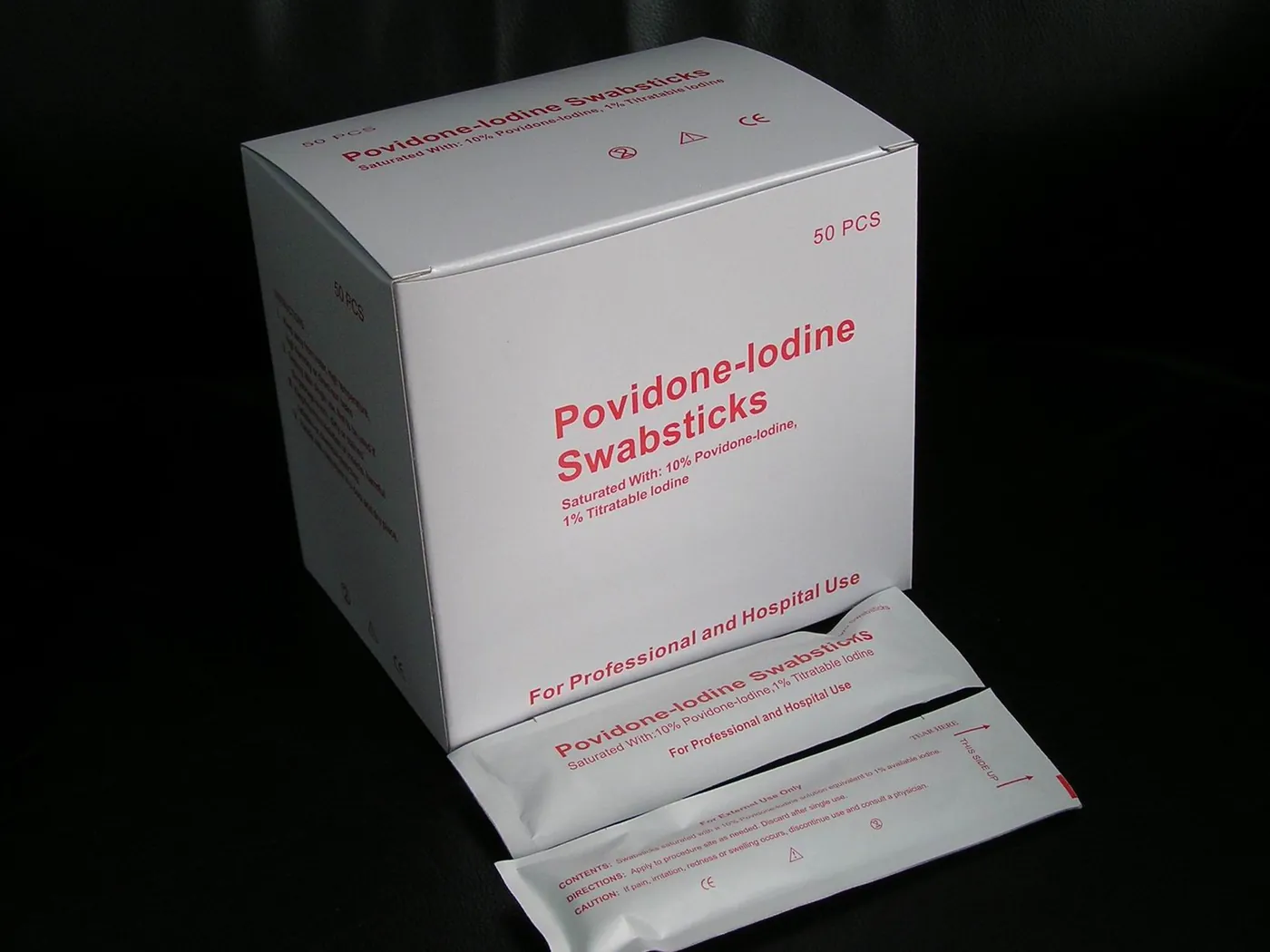
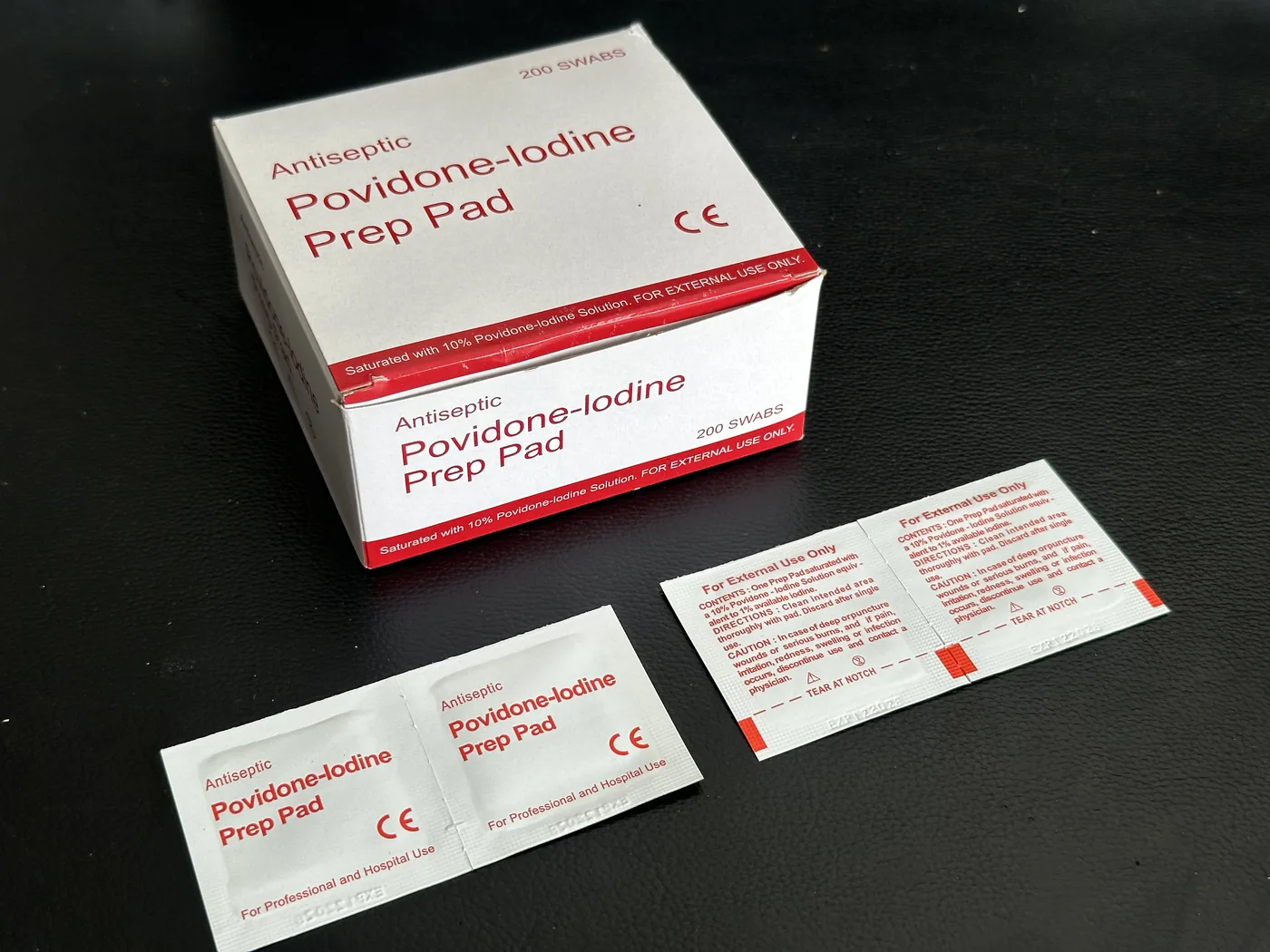
Unlike a flat prep pad, a swabstick has a plastic stick and a degreased-cotton head. The stick must keep its shape and the cotton head must not shed or come loose in use. A swab that falls apart at the bedside is a quality failure regardless of its chemistry.
For buyers — what to ask for: a COA with the measured available iodine and pH — not just the label value — plus confirmation of fluid content and that seal/leak testing is run per batch.