Sizes and packaging
| Parameter | Specification |
|---|---|
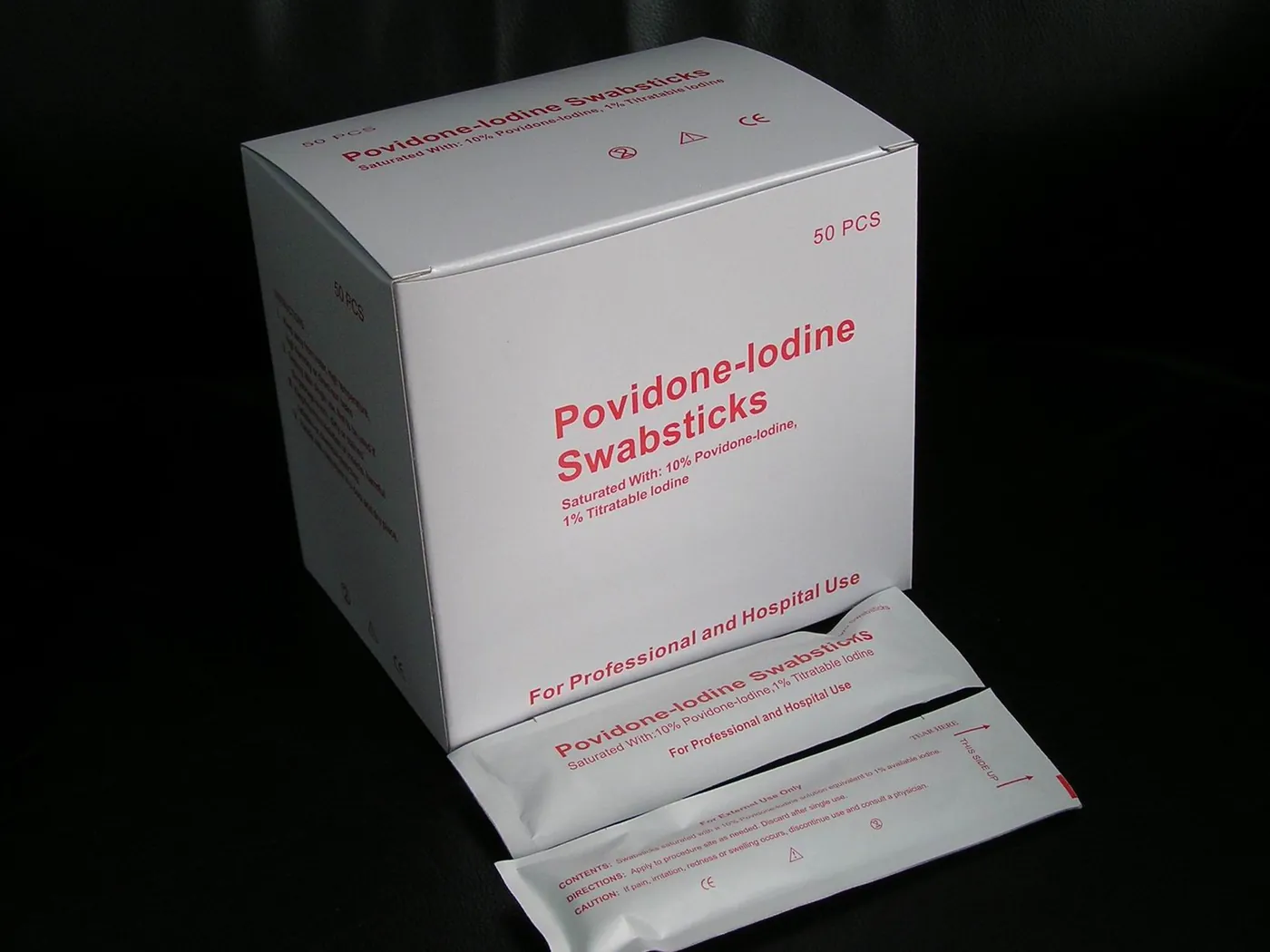
| Active ingredient | Povidone-iodine 10% |
| Lengths | 70 / 100 / 150 mm (2.75 / 4 / 6 in) |
| Per pouch | 1, 2 or 3 swabsticks |
| Per box | 50 pouches |
| Sterility | Non-sterile (standard); other options on request |
| Shelf life | 3 years from manufacture date |
What are iodine swabsticks used for?
Swabsticks apply antiseptic to a precise spot without your fingers touching the treated skin: injection and venipuncture sites, IV and catheter insertion points, and small areas before minor procedures. Compared with a prep pad, the stick gives targeted control; a pad covers a larger area faster. Each stick is single-use — no dipping back into any container. When sourcing, check the saturation level, seal integrity of the pouch, COA per lot and the manufacturer's ISO 13485 certification and EU Declaration of Conformity.
Frequently asked questions
What are iodine swabsticks used for?
For targeted skin antisepsis before injections, venipuncture, IV or catheter placement and minor procedures. The pre-saturated cotton tip applies povidone-iodine to a precise spot without fingers touching the treated skin.
What sizes do iodine swabsticks come in?
Standard lengths are 70, 100 and 150 mm (2.75 / 4 / 6 inches), packed 1 to 3 swabsticks per pouch and 50 pouches per box. Custom configurations are available for OEM orders.
Are iodine swabsticks sterile?
Our standard iodine swabsticks are non-sterile, which suits routine skin antisepsis; other options may be available on request. Always check the pouch label for the sterility statement.
Swabstick or prep pad — which should I choose?
A swabstick gives targeted, no-touch application on a small spot; a prep pad covers a larger area faster. Many buyers stock both — same antiseptic, different formats.