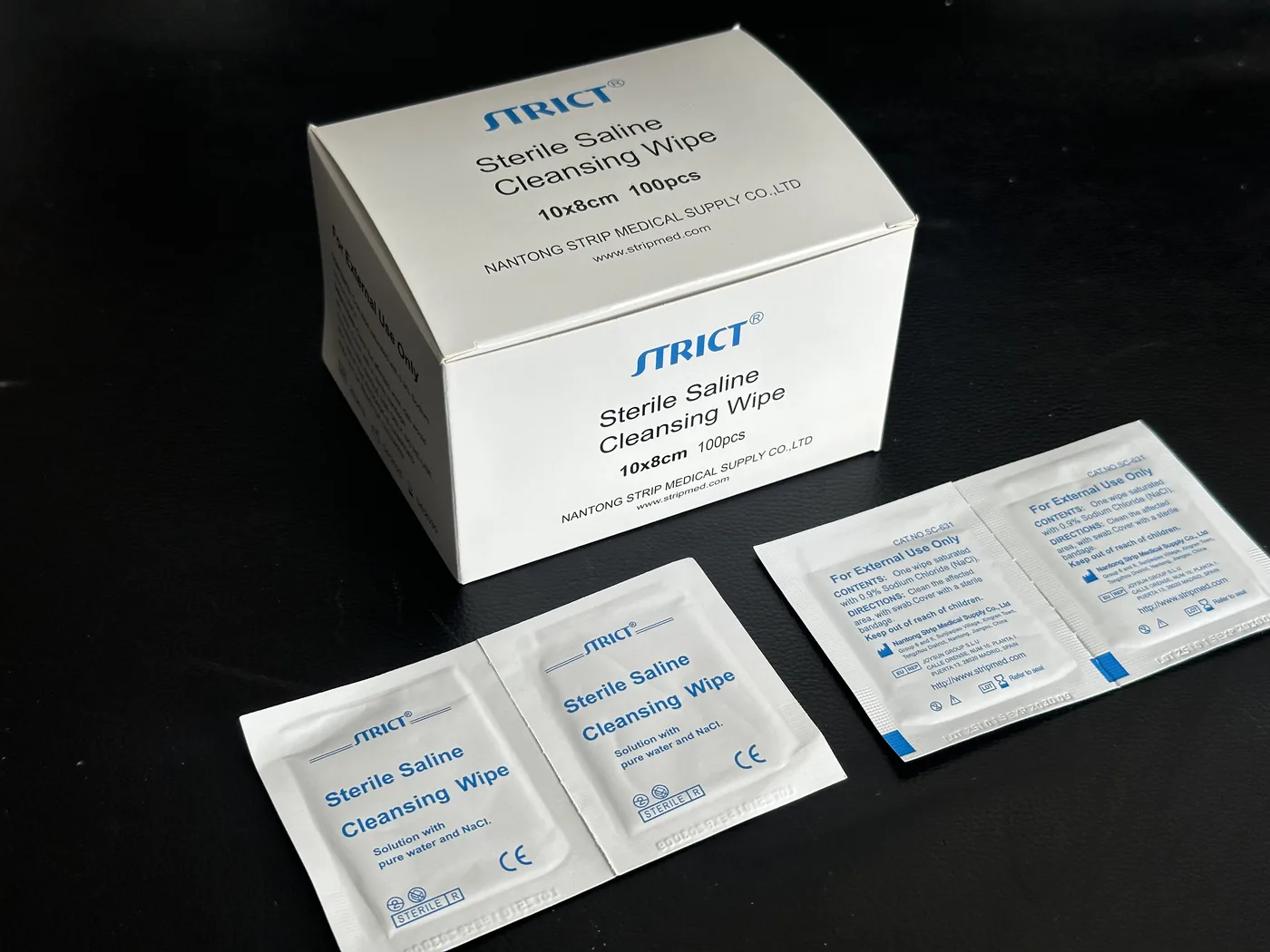
Saline vs sea-salt soak
| Sterile saline (0.9%) | Homemade sea-salt soak | |
|---|---|---|
| Concentration | Exactly 0.9% (isotonic) | Easy to make too strong → stinging |
| Sterility | Sterile, single-use | Depends on water and container |
| Additives | None | Sea salt may contain iodine / anti-caking agents |
| Convenience | Ready to wipe or rinse | Mixing required each time |
| Saline cleansing tube | Repeat use from one pack | Resealable canister of wipes |
The takeaway
If you get the strength and cleanliness right, a soak can help — but a ready-made sterile 0.9% saline removes the guesswork. Follow your piercer's advice; see our piercing aftercare range.
If you do make a sea-salt soak
Ready-made sterile saline is safer and more consistent, but if you mix your own, get the strength right: about ¼ teaspoon (1.25 g) of non-iodized sea salt per 250 ml (1 cup) of warm distilled or previously boiled water — roughly 0.9%. Too much salt stings and dries the skin; too little does little. A homemade mix is not sterile, cannot be stored and the concentration is easy to get wrong — which is exactly why studios and brands prefer ready-to-use 0.9% saline.
Frequently asked questions
Is sea salt the same as saline?
Only if mixed to the right strength (isotonic ~0.9%) with clean water. Ready-made saline is that concentration every time.
Can a sea-salt soak be too strong?
Yes — too much salt irritates a healing piercing. Isotonic 0.9% is the target.
Which is safer for a new piercing?
Sterile, ready-made 0.9% saline — it is sterile and correctly concentrated.